
Conservation
The Relevance of HCV and HCS in the Current Forest Protection Framework
"Rereading the Role of Voluntary Standards in the Era of Anti-Deforestation Regulation"

HCV (High Conservation Value) and HCS (High Carbon Stock) remain important as protective tools. However, in the context of increasingly data-driven, regulatory and accountability-based sustainability, this approach needs to be complemented by a more adaptive governance and monitoring system. Thus, the challenge ahead is not to choose between HCV/HCS or EUDR, but to build a system that consistently puts forest-based legality first, with HCV and HCS as an additional layer of protection that is adaptive and relevant to global policy direction.
How are HCV and HCS developing in today's sustainable landscape?
If HCV and HCS were originally designed as risk prevention instruments, would the same framework still be sufficient to address today's sustainability demands increasingly defined by global regulations, verifiable forest cover data, and legal accountability demands along the supply chain?
For more than a decade, the HCV and HCS approaches have been the main foundation for the implementation of the No Deforestation, No Peat, No Exploitation (NDPE) commitment in the palm oil sector with a cut-off date of 31 December 2015. The framework plays an important role in identifying and protecting areas of high ecological and social value, and establishes minimum standards of sustainable practice at the site level, as well as being a key reference for voluntary compliance certification and assessment.
In practice, some companies still interpret NDPE compliance as an effort to determine the exclusion of areas that can be developed, through technical justification for areas that are not identified as HCV or HCS. This approach positions HCV/HCS as a procedure-based compliance tool, assuming that as long as an area can be excluded from the HCV/HCS category, land clearing can be justified.
The early promoters of NDPE positioned HCS and HCV as safeguards, not as space optimization tools. This means that the main function of HCS/HCV is to set ecological and social boundaries that must not be exceeded, not to be a negotiable variable to meet development targets. The development of the global discourse shows that this understanding is not entirely in line with the basic principles of the NDPE. From the onset, NDPE was not designed as an instrument to quantify HCS/HCV to open up new territories, but rather as a risk prevention framework to ensure that expansion does not compromise forests, high-value ecosystems, and people's rights.
The current global discourse suggests that an exception-based approach is increasingly out of line with the basic principles of NDPE. This is driven by the increasing demand for deforestation-free supply chains, the enactment of regulations such as the European Union Deforestation Regulation (EUDR), and the widespread use of global forest cover data. The development of carbon stock methodologies, as well as the use of global forest datasets, is increasingly influencing the way high-value areas are identified and interpreted. In this context, the HCV/HCS approach that is treated as a static assessment at the beginning of the development cycle is becoming limited.
This development confirms that the challenge ahead lies not in the relevance of HCV and HCS as instruments, but in how the framework is positioned and operationalized. HCV and HCS remain important, but they need to be understood as baseline safeguards that are part of a broader and adaptive risk governance system.
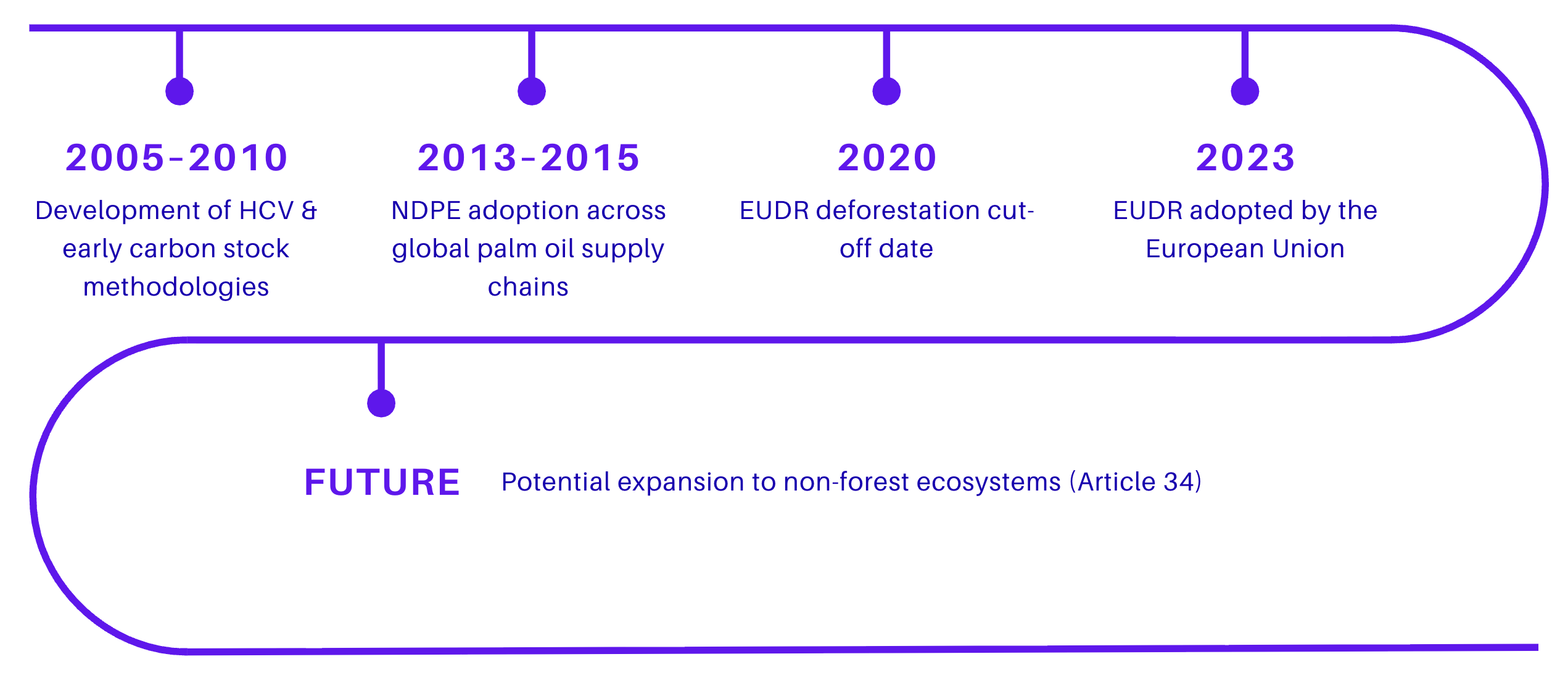
Figure 1. Evolution of Deforestation Governance
From Voluntary Standards to Legal Obligations
HCS and HCV were born in the context of Voluntary Sustainability Standards (VSS), such as the RSPO and FSC, which aim to balance conservation and development in countries with high forest cover. This approach is a compromise: not all forests are protected, but they are selected based on ecological, carbon, and social functions.
The EUDR is a regulation that is at odds with that compromise. The regulation applies a principle of strict liability, with a technical definition that is non-negotiable. Compliance is no longer determined by the assessment or certification process. As a result, compliance with HCS/HCV is not automatic and often does not mean compliance with EUDR.
Changing Context: FAO, Global Forest Data, and EUDR
In this new governance landscape, the central question is no longer “Is this area HCV or HCS?” but increasingly “Does this area qualify as forest?”
The FAO definition of forest, which is adopted in the EUDR, as well as the availability of global forest datasets based on satellite imagery, has brought about a fundamental change in the way deforestation is assessed. FAO definitions establish forest status structurally and binarily, while datasets such as the Tropical Moist Forest (TMF) developed by the European Union's Joint Research Centre allow for consistent and independently verifiable long-term monitoring of forest cover changes.
Within this framework, the EUDR applies a data-driven and legal approach with a cut-off date of 31 December 2020. Any land clearing after that date, in an area that structurally meets the FAO definition of forest, can be recorded as deforestation regardless of whether the area is identified as HCV or HCS. This difference in approach poses a fundamental challenge in aligning voluntary standards with binding regulations.
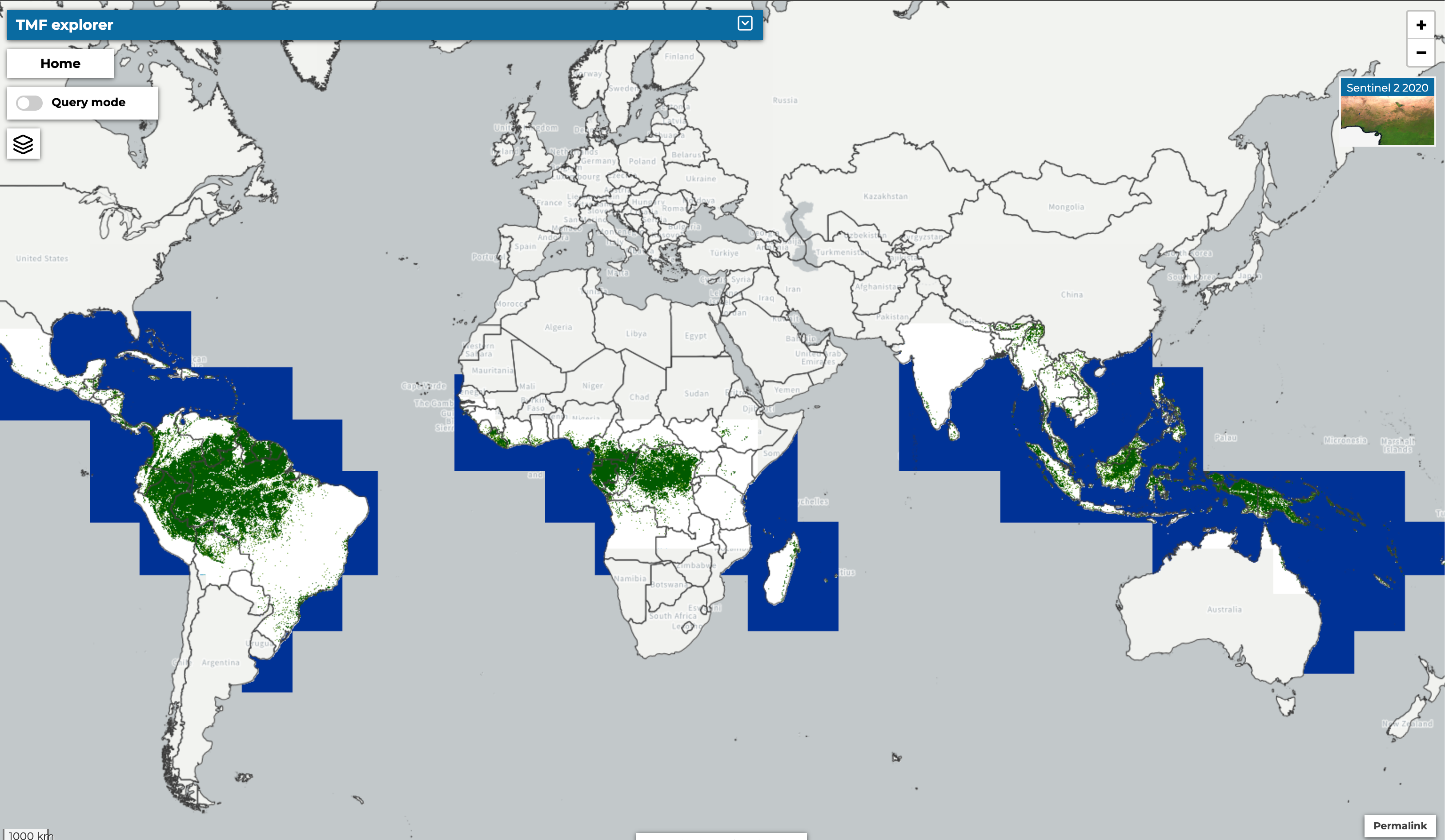
Figure 2. Example of global forest monitoring datasets (JRC Tropical Moist Forest monitoring) increasingly used as references in regulatory compliance systems.
Key Takeaways
• HCV and HCS remain relevant as safeguards but no longer determine deforestation legality
• Under EUDR, forest protection is defined by FAO forest criteria and legal frameworks
• Global satellite forest datasets are becoming central compliance references
• Corporate risk management is shifting from certification to legal due diligence
Implications for Practice and Decision Making
In practice, it is still often encountered that areas outside HCV or HCS can be treated as areas that can be developed. This meaning is understandable within the framework of voluntary standards, but it is increasingly irrelevant in the context of a law-based deforestation-free policy.
For buyers and investors, risk assessments have now shifted significantly: the focus is no longer solely on the results of HCV or HCS assessments, but on the existence of deforestation according to legal definitions and verifiable global forest data. Consequently, purchasing decisions, investments, and supplier engagement are increasingly determined by legal and market risks, not just by compliance with voluntary standards.
The position of HCV/HCS in the EUDR Framework
The development of global regulations, particularly through the EUDR, clarifies the fundamental repositioning of the role of HCV and HCS in deforestation governance. Within this framework, forest protection is no longer dependent on the results of conservation value assessments or carbon stocks, but is determined directly by the legal status of forests based on FAO's definition adopted by the EUDR.
Forests: Unconditional Conversion Ban
The EUDR applies an absolute definition of forest, so that any area that meets the forest criteria is subject to a strict conversion ban, regardless of forest class, level of degradation, or biodiversity value. With this approach, HCV and HCS are no longer needed as screening instruments for forest areas, as the status of the forest itself has become the legal basis for deforestation bans. In the context of the EUDR, the absence of HCV values or low HCS carbon stocks has never been the basis for exemption from the forest conversion ban.
Article 34(2) as a Strategic Direction for Ecosystem Protection
The EUDR's policy direction is most clearly reflected in Article 34 paragraph (2), which explicitly opens up space for the expansion of regulatory coverage to non-forest natural ecosystems, including grasslands, peatlands, and wetlands in particular those with high carbon stocks and important biodiversity values. This provision, in line with Whereas (Recital) 82, shows that the EU's medium-term goal does not stop at forest protection alone, but moves towards the protection of natural ecosystems more comprehensively.
In this context, the relevance of HCV/HCS is placed not in determining the legality of forest conversion, but rather as a potential reference for securing high-value non-forest ecosystems if the expansion of the EUDR coverage is adopted.
Article 34(1): Other Wooded Land and Conversion Gap Closure
The repositioning is strengthened by Article 34 paragraph (1) of the EUDR, which requires the European Commission to conduct an impact assessment related to the possibility of expanding the scope of regulation to other wooded land (OWL). This category has historically been often associated with sparse or semi-arid forested ecosystems such as grasslands, peatlands and wetlands that are prevalent in Latin America, including the Cerrado and Gran Chaco.
So far, the conversion of these areas has often not been categorized as deforestation in market practices and policies, so it is perceived as a relatively "safe" area in terms of compliance. The inclusion of the OWL on the EUDR's official review agenda marks the policy direction to close the gap, as well as showing that the old assumption of "non-forest" as an exception to deforestation is increasingly untenable. This further narrows the space for the use of HCV/HCS as a justification for the conversion of tree vegetation.
These developments confirm that the changing role of HCV and HCS is not just a methodological issue, but a direct consequence of shifting global deforestation legal and governance frameworks.
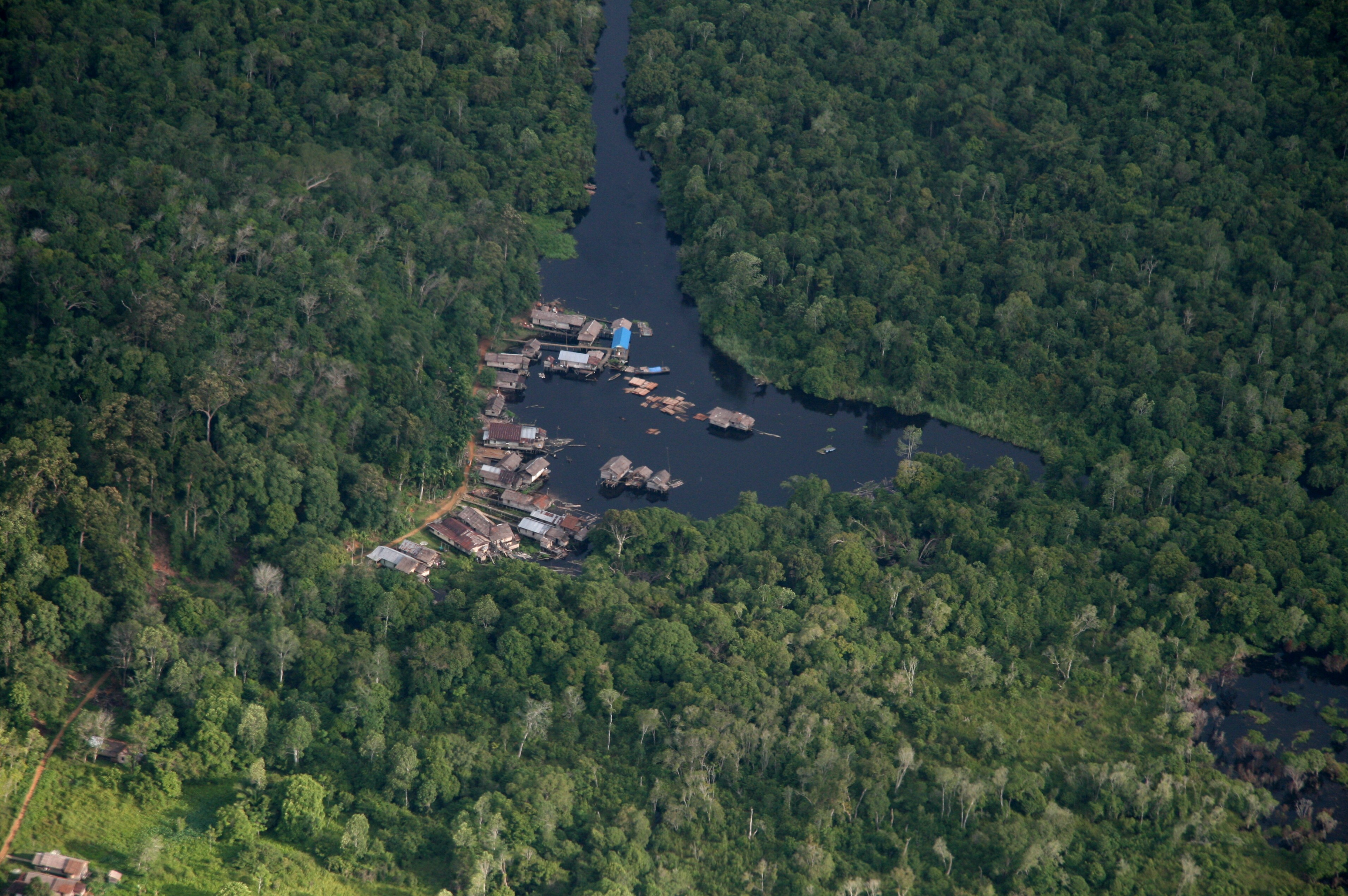
Figure 3. Riverine forest landscape with small-scale human activity illustrating the complex interface between forest cover, livelihoods, and land use pressures—contexts where the limitations of static HCV/HCS assessments become increasingly evident under data-driven regulatory frameworks.
How the Role of HCV and HCS Is Changing
The changing role of HCV and HCS is rooted in fundamental differences with the FAO definition of forests adopted by the EU Deforestation Regulation (EUDR). FAO's definition is straightforward, i.e. any tree-lined vegetation that meets the structural criteria is categorized as a forest and cannot be converted, regardless of its conservation value or carbon stock. In contrast, HCV and HCS were developed as operations management tools to identify ecological value and prioritize protection in the context of sustainable development.
Tensions arise when the results of HCV or HCS assessments are used to justify the conversion of tree-lined vegetation that, according to the FAO definition, remains forest. Thus, HCV and HCS cannot be used to abort the status of forests, but are only relevant as complementary instruments, but are essential especially in the context of the protection of non-forest natural ecosystems.
More than a decade of field experience shows that HCV and HCS are not designed as instruments for banning deforestation in its entirety. Its project-specific and inconsistent implementation, often in tandem with a decline in forest cover, makes this approach even more lagging behind the global forest maps based on satellite imagery that are now the main reference for regulators and markets.
The EUDR clarifies this repositioning by placing forest protection as an absolute boundary, while HCV and HCS are only mentioned in the context of extending protection to non-forest ecosystems. Thus, the role of HCV/HCS shifts from gatekeeper to essential complement.
The implications for buyers and companies are clear: compliance with legal definitions of forests and global data is a key prerequisite for market access. HCV and HCS are no longer sufficient evidence of "no deforestation", but are only valuable if they provide tangible additional protection outside of forest areas. In this regime, sustainability strategies shift from mere compliance with standards to legal and market risk management.
Transformation of values and norms
The EUDR makes it clear that forest protection based on FAO definitions should be the main foundation in deforestation governance. In this context, forest-based legality first refers to an approach that places the legal status of forests based on FAO definitions and binding regulatory frameworks as starting points and minimum limits in any land management and supply chain decisions. This approach is in line with the forest governance literature which asserts that legal compliance and legality verification are prerequisites before other sustainability instruments can function effectively (Cashore et al., 2012).
Through Recital (Whereas) 82 and Article 34, the European Union has actually repositioned HCS so that it is not only a filter for the legality of forest deforestation, but also plays a role in the protection of non-forest ecosystems such as grasslands, peatlands, and wetlands as Essential complements. This repositioning reflects a shift from a voluntary standards regime to law-based governance, where sustainability instruments serve to complement rather than replace binding legal frameworks (Overdevest & Zeitlin, 2018).
Thus, the challenge ahead is not to choose between HCV/HCS or EUDR, but to build a system that consistently puts forest-based legality first, with HCV and HCS as an additional layer of protection that is adaptive and relevant to global policy direction. Studies have also shown that the effectiveness of forest and ecosystem protection is highly dependent on the clarity of land legal status and regulatory enforcement capacity as the foundation of governance (Nurrochmat et al., 2016).
The strategic question for companies and supply chain actors is therefore not whether HCV/HCS should be replaced, but whether governance systems are ready to transition from assessment-based sustainability to continuous, data-driven forest legality monitoring.